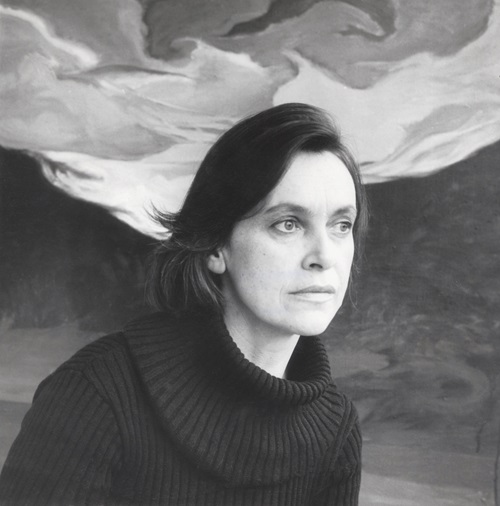
Maria Żaboklicka-Budzichowa
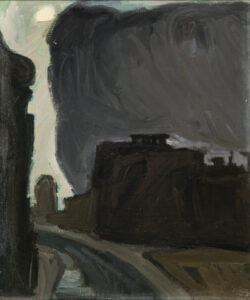
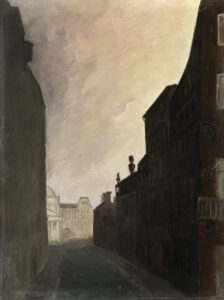
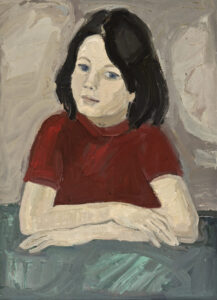
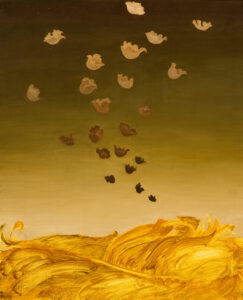
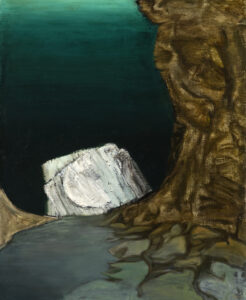
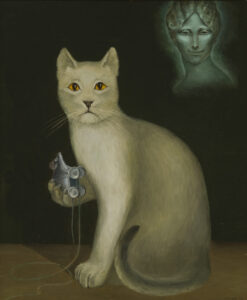
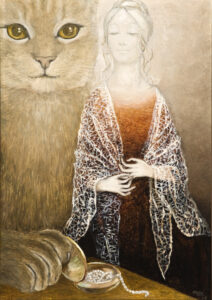
Maria Żaboklicka-Budzichowa (born on 24.10.1924 in Warsaw, died 13.10.1977 in Warsaw), Polish painter. She graduated in 1950 from the Academy of Fine Arts in Cracow in the class of prof. Zbigniew Pronaszko. Her work includes cityscapes and portraits, but most of her paintings are visual impressions of literary works. During her lifetime, they were presented in 15 individual exhibitions and in many collective exhibitions, some of which she also co-organised and curated. She is primarily known for her cycle of 183 paintings inspired by the novel “The Master and Margarita” written in 1940 by the Russian writer Mikhail Bulgakov. They are not attempts to illustrate the book, but rather to pay homage to the author and enter into dialogue with him.
Maria Żaboklicka-Budzichowa drew inspiration from literature and music, from the works of the Old Masters, but also from Polish colourists and the Swiss-German artist Paul Klee. She organised informal meetings which brought together outstanding Polish painters, writers, composers and actors of her time, but she was also a friend of the French painter Jean Camberoque. Her paintings can be found in several Polish museums (including the National Museum in Warsaw) and in many private collections in Poland, Sweden, Belgium, France, Greece and the US.
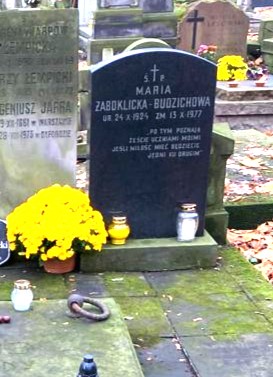
Żaboklicka-Budzichowa
in Warsaw
‘By this all people will know
that you are my disciples,
if you have love for
one another (John 13;35)‘
Painting was the artist’s primary form of expression, but she also practised drawing, textile design, and wrote poetry. One of her passions was to seek out connections between people from different creative backgrounds in order to get them to think about art together. Maria Żaboklicka-Budzichowa’s thoughts on painting, literary and musical interests gave birth to the idea of the exhibition ‘Towards Romanticism’, which accompanied the 1970 Chopin Competition. Among those who took part in the informal meetings she organised were the composers Tadeusz Baird and Stefan Kisielewski, the writer Andrzej Drawicz, the actors Aleksander Bardini and Jan Świderski, and, of the painters, Stanisław Rodziński, Jacek Sienicki and Jacek Sempoliński.
Stanisław Rodziński, Polish painter, former chancellor of the Academy of Fine Arts in Krakow, who died in 2021, wrote the following about her work:
The ‘Notes from Reading’ series is “sharing with those who were to see these paintings her interpretation of literature, a kind of translation of literature into painting. It is a series that could only have been painted by someone who reads carefully, attentively, who finds in his readings what allows him a special and unique friendship with someone who wrote once, sometimes decades ago.
Maria Zaboklicka’s Romanticism is not a reactivation of old motifs and emotions. It is a rediscovery of the climate and genesis of the romantic interpretation of nature. It is also seeing and feeling Romanticism as an enduring value, as a form of experiencing, seeing the permanence of drama, the expressiveness of life.
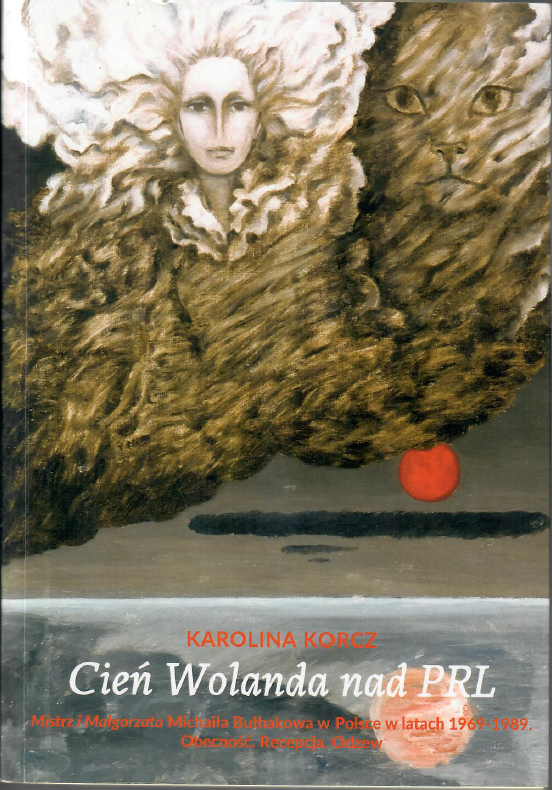
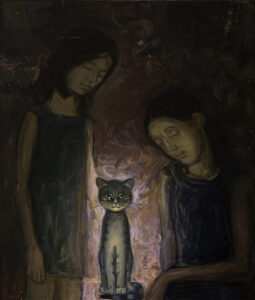
In the last years of her life, virtually all of the artist’s work is inspired by Mikhail Bulgakov’s ‘The Master and Margarita’. However, these are not illustrations for the book, nor an attempt to depict the characters outlined by the writer. Karolina Korcz, author of the 2019-published work (in Polish) ‘Mikhail Bulgakov’s The Master and Margarita in Poland 1969-1989: Presence. Reception. Response‘: “it can be assumed that in Bulgakov’s prose she was fascinated by the axiological aspect, the permanence of certain truths and principles governing human destiny. Truth, Goodness, Beauty, the immutability of values in art and life were particularly important to her”. The cover of Korcz’s book is a reproduction of one of Maria Żaboklicka-Budzichowa’s paintings.